

Daikan | RAMEN eatery
DFC, Dubai, the UAE | 2025 | 165 sq.m + 65 terrace
Team: Egor Bogomolov, Valerii Egorov, Valeria Dzhigil, Dmitry Ivanov, Ekaterina Tarasova, Polina Dyachenko
Photographer: Sergey Nekrasov
Photographer: Sergey Nekrasov
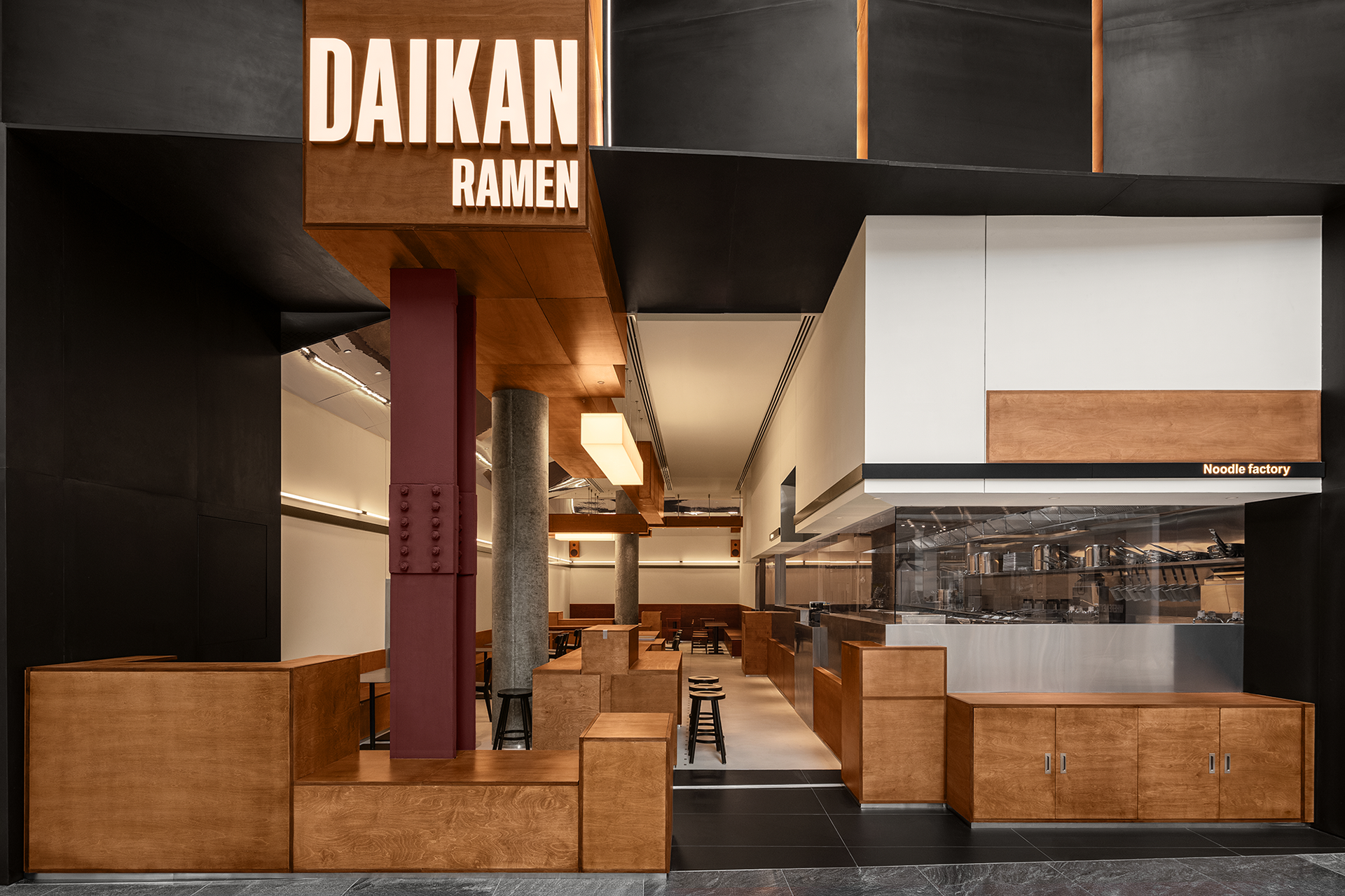
We began our collaboration with Daikan — a brand that has grown since 2017 from a small ramen shop in DIFC into a large-scale gastronomic concept featuring two formats: DAIKAN Ramen and DAIKAN Izakaya.
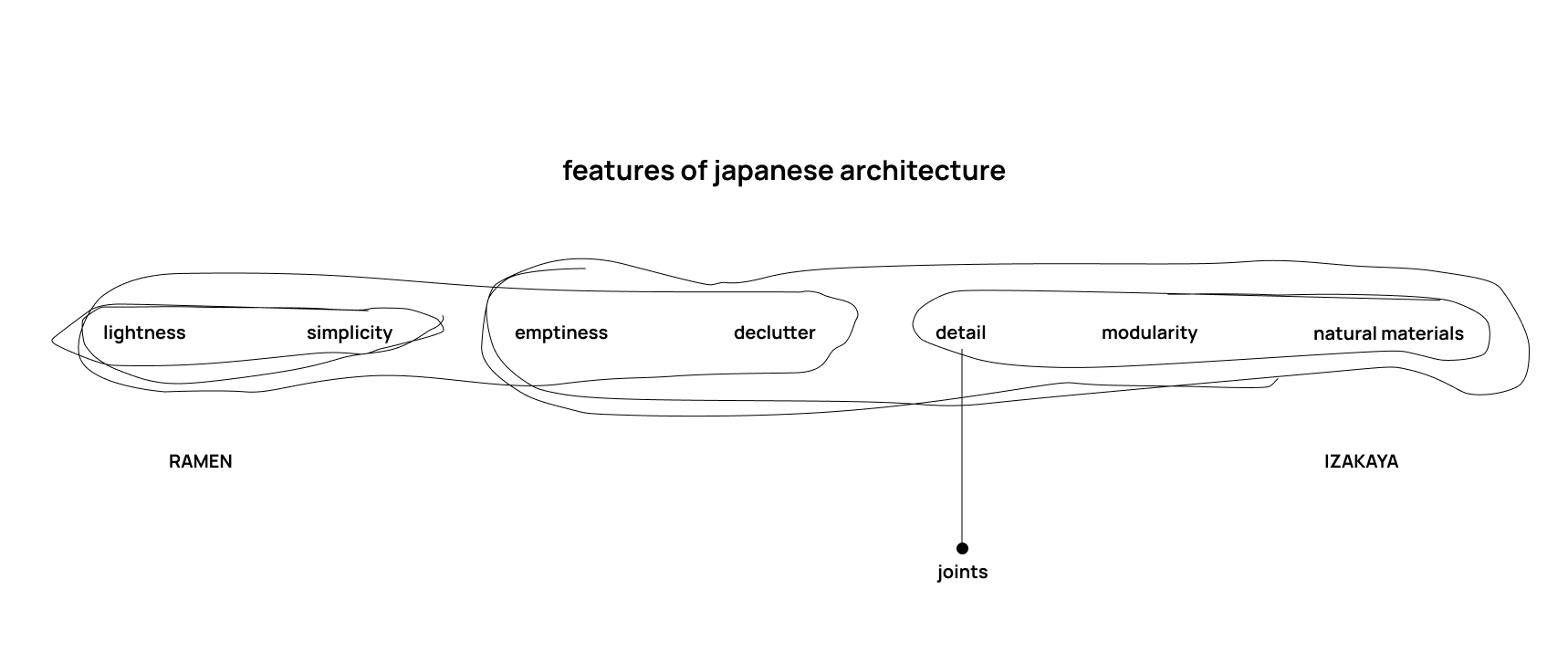
While the izakaya in Dubai is a more evening-oriented format, with a bar and an intimate atmosphere, the ramen shop is a daytime, democratic spot with a simple menu, fast visit trajectory, and broad audience.
plan ↓
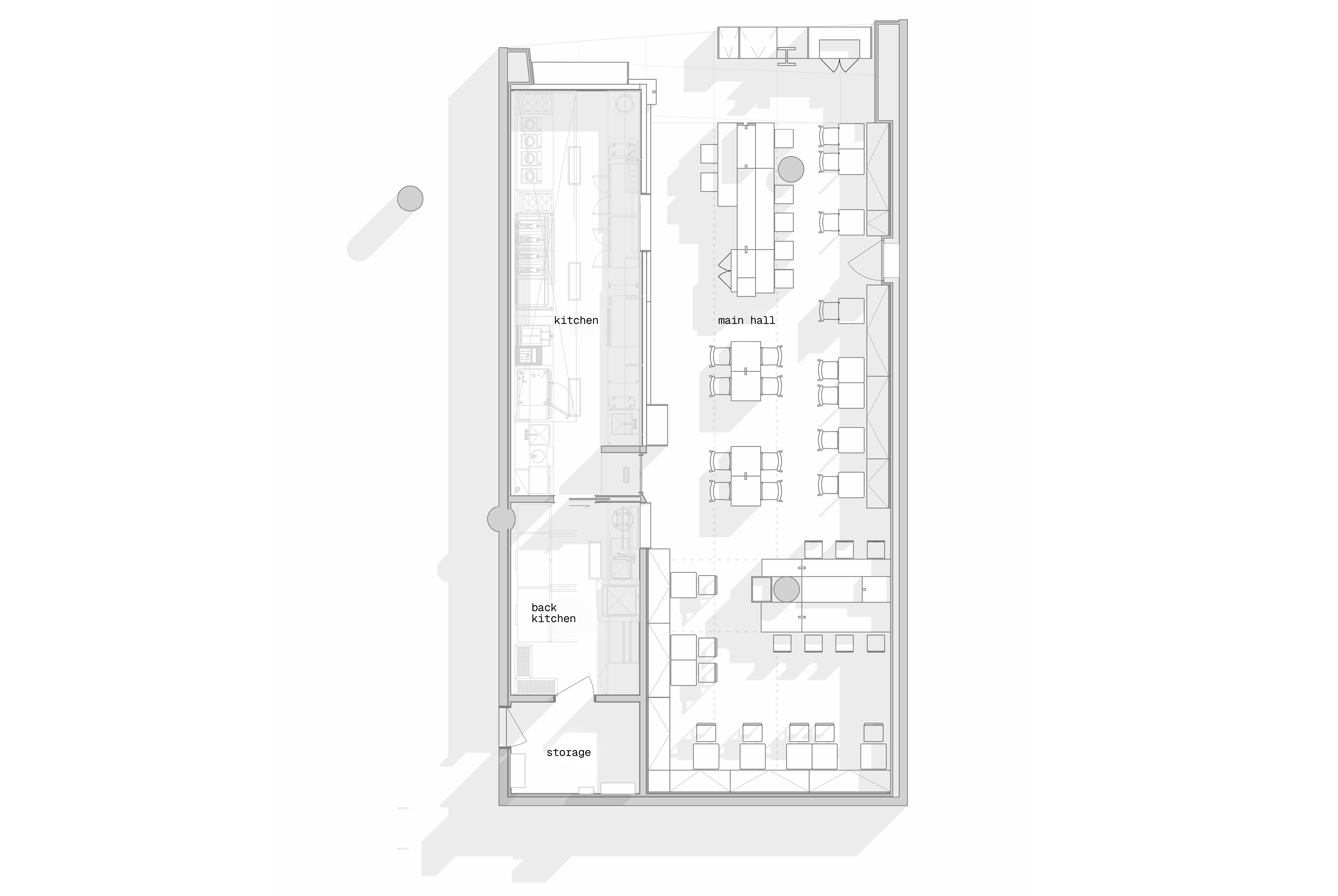
It was essential for the team to preserve the Daikan vibe loved by the local community — the feeling of being transported out of Dubai into another cultural context — while building a visual identity that could be scaled for future locations.
Drawing on principles of Japanese architecture — modularity, functionality, and adaptability — we searched for an architectural device capable of unifying the brand’s different spaces.
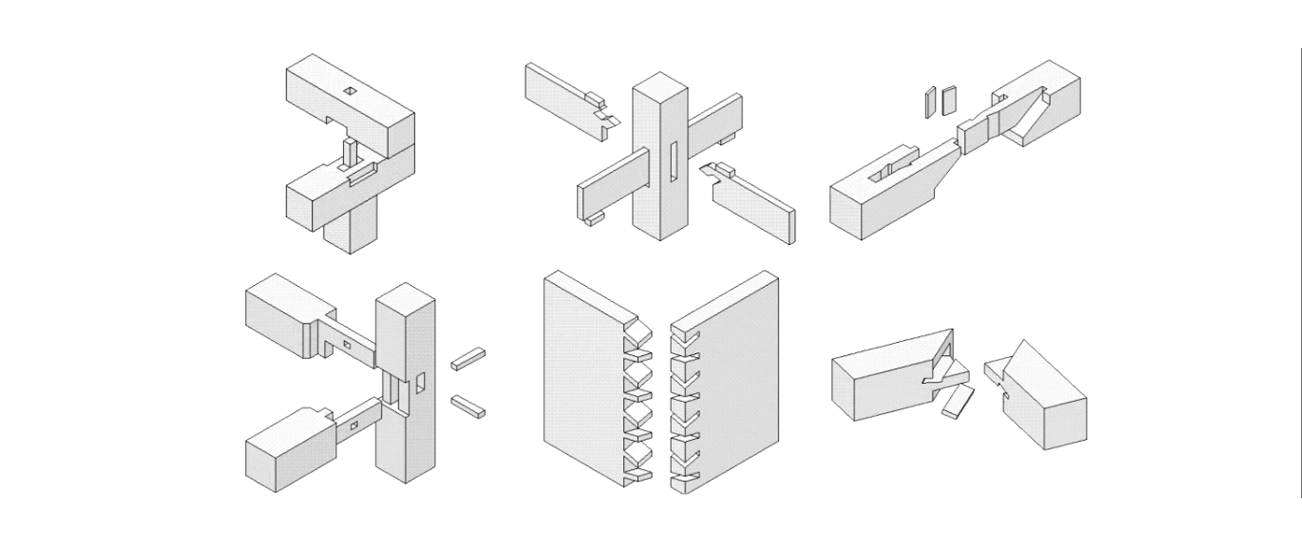
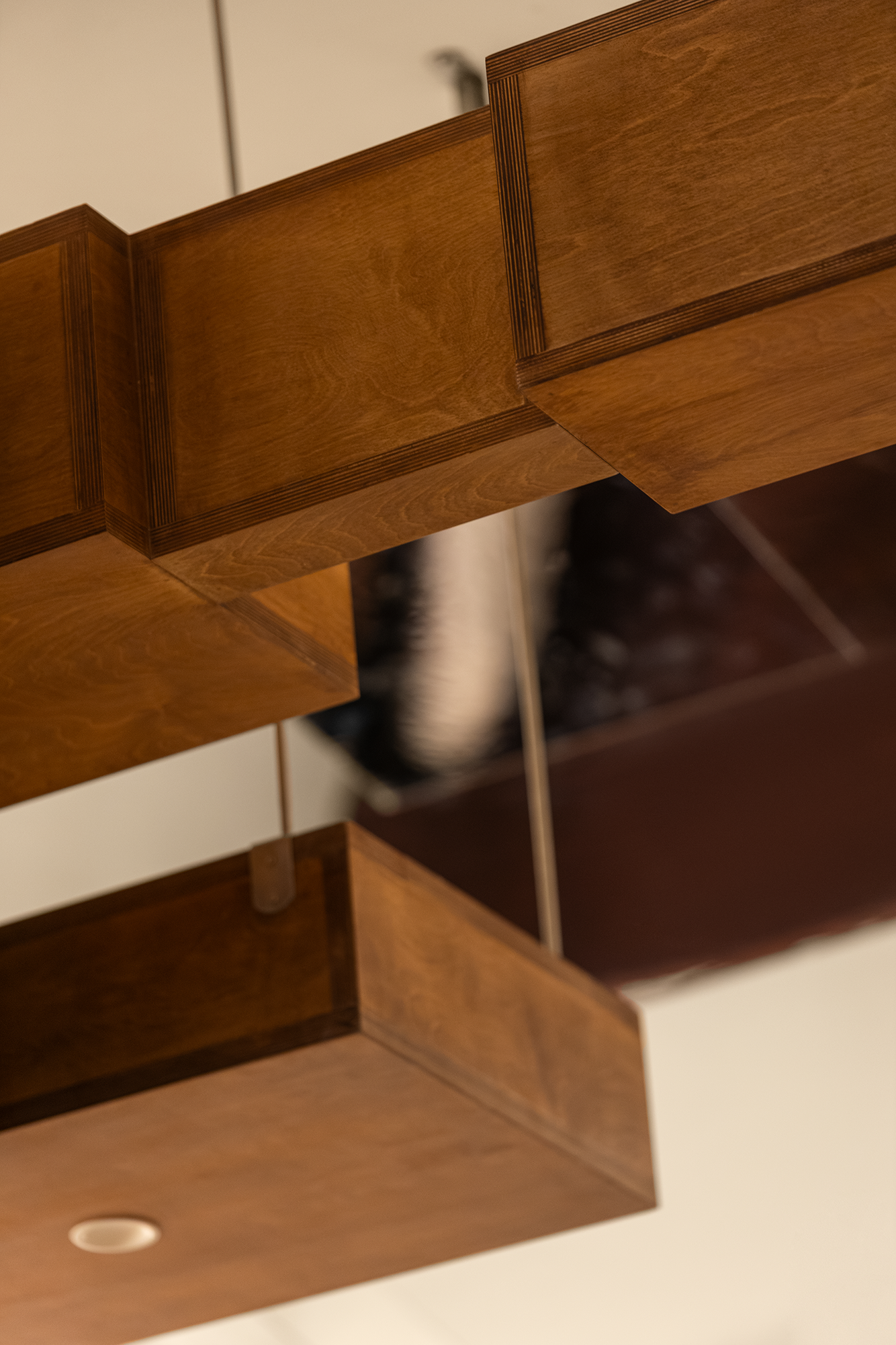
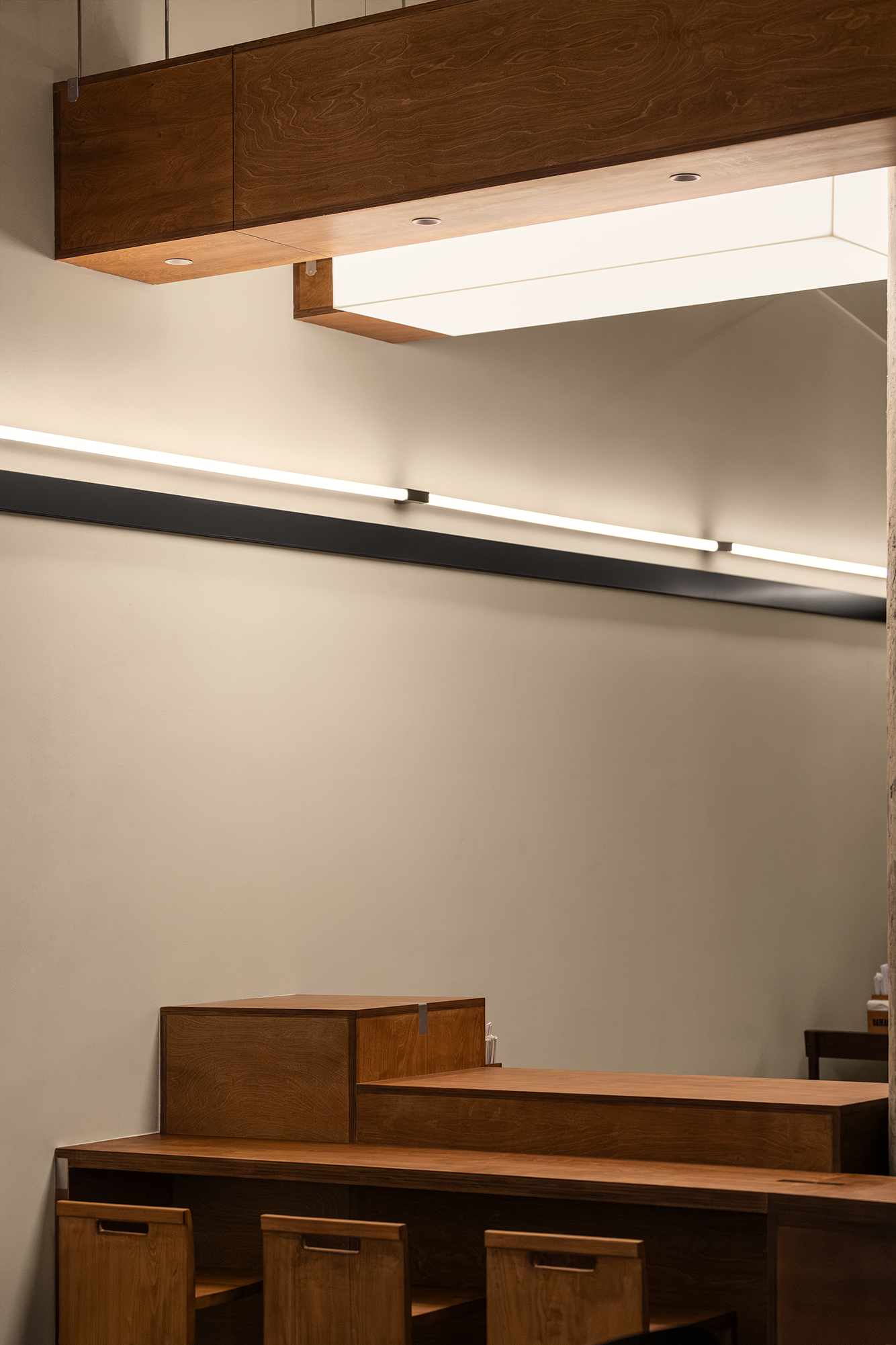
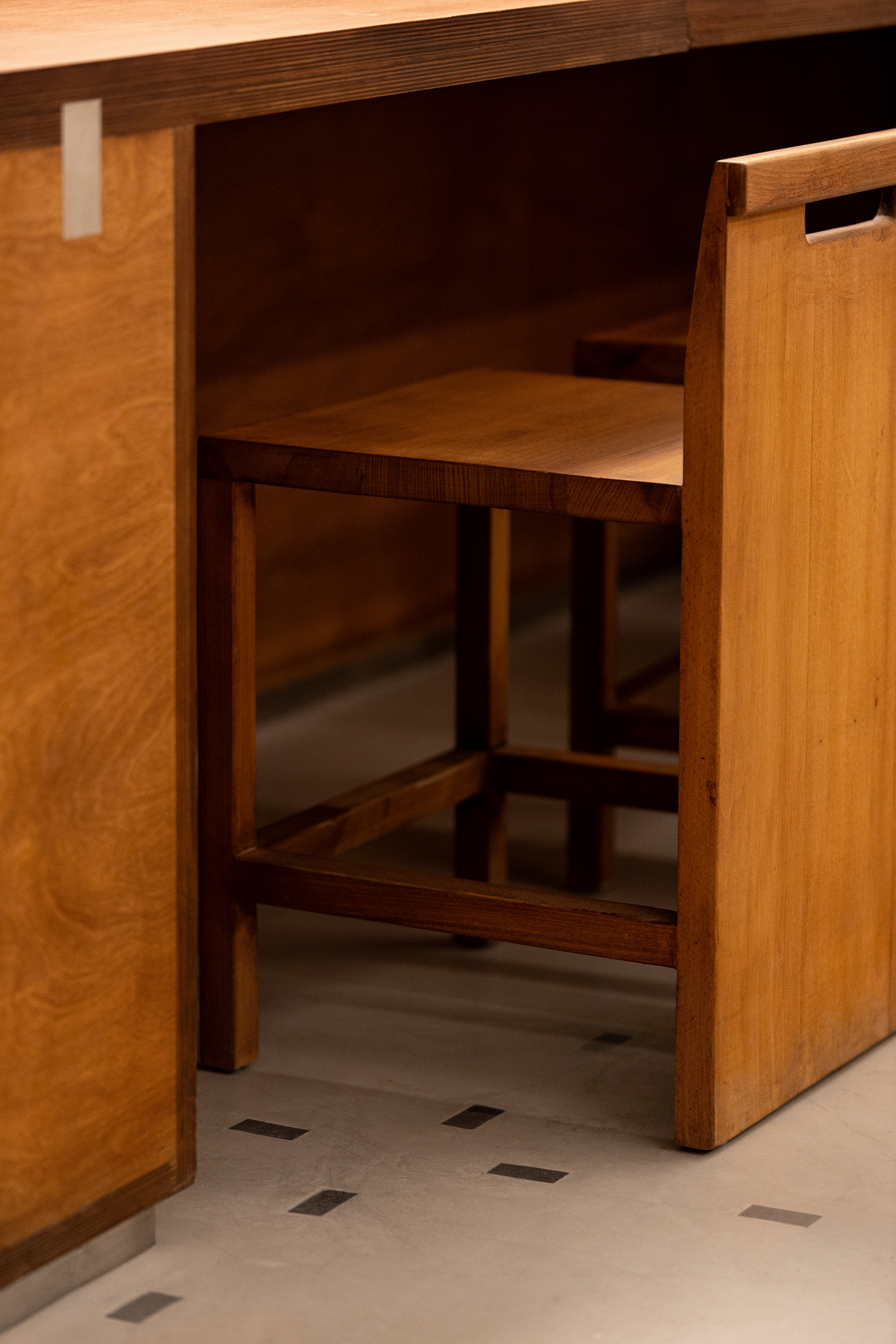
We found it in the system of traditional Japanese joinery: characteristic notches and mortise-and-tenon elements that, in the project, became a large-scale construction set defining not only the furniture but the logic of the entire interior.
axonometry
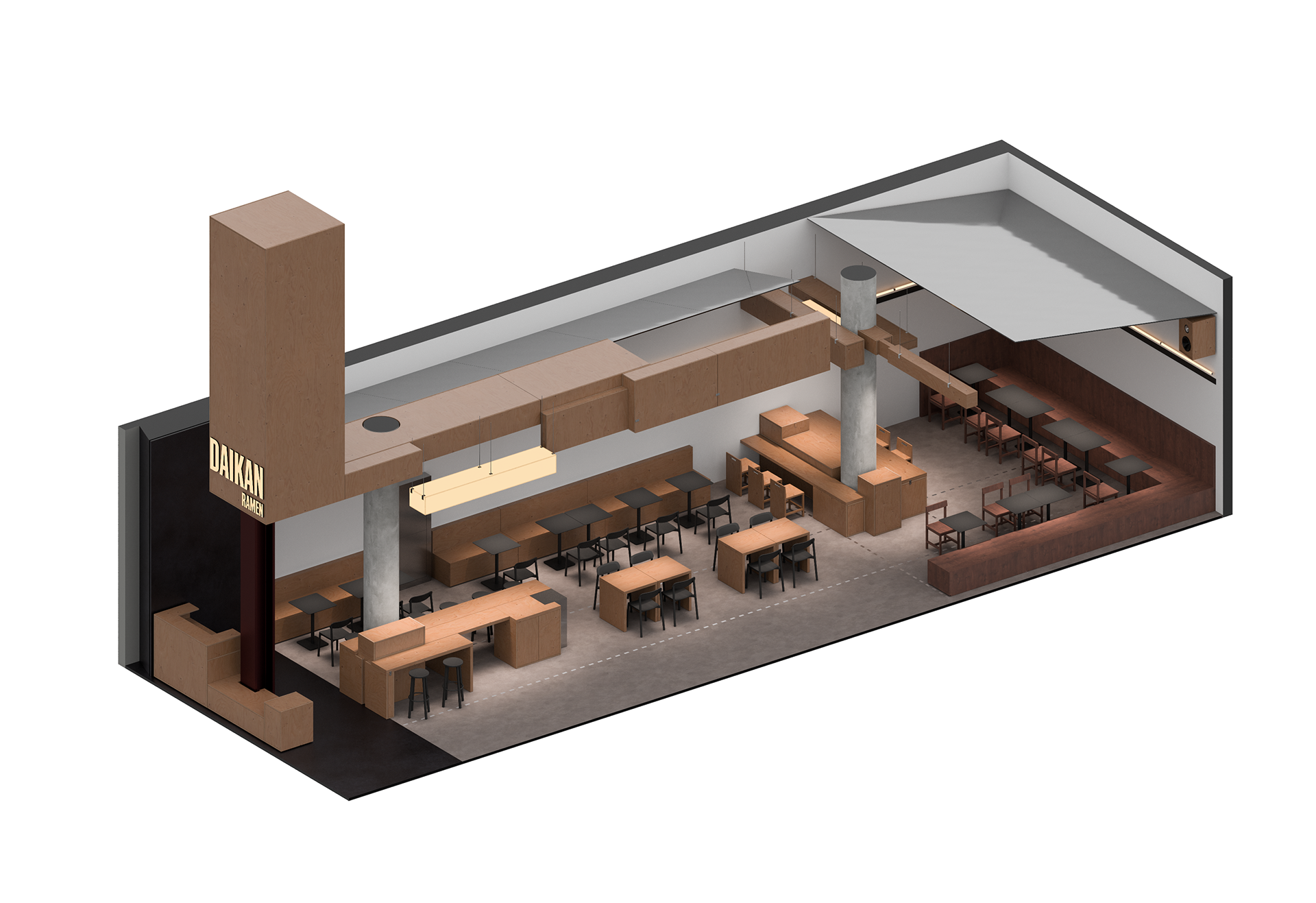
This joining principle shapes the layout and reads clearly in the composition: elements seem to “slot” into one another, forming a spatial Jenga at an architectural scale.
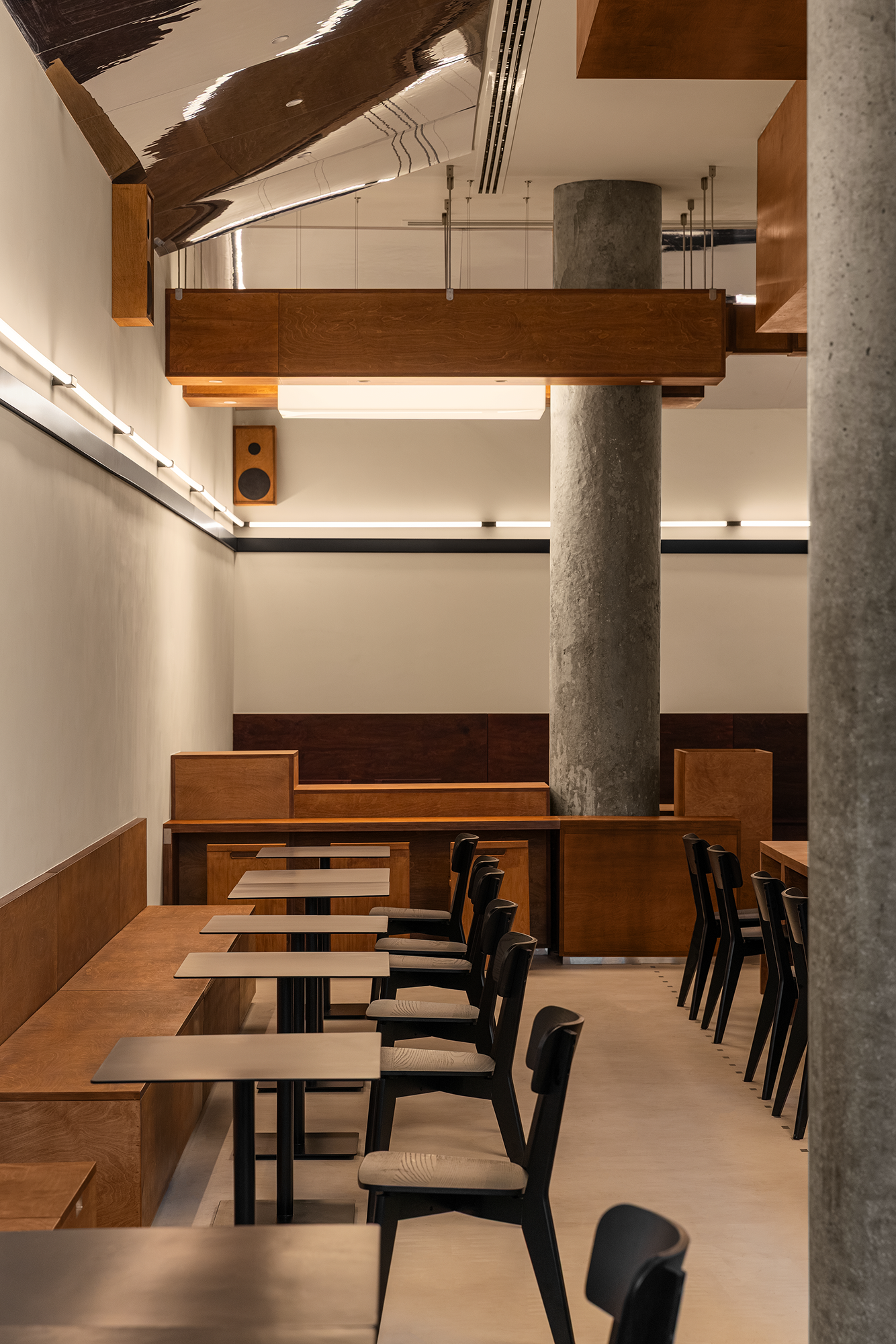
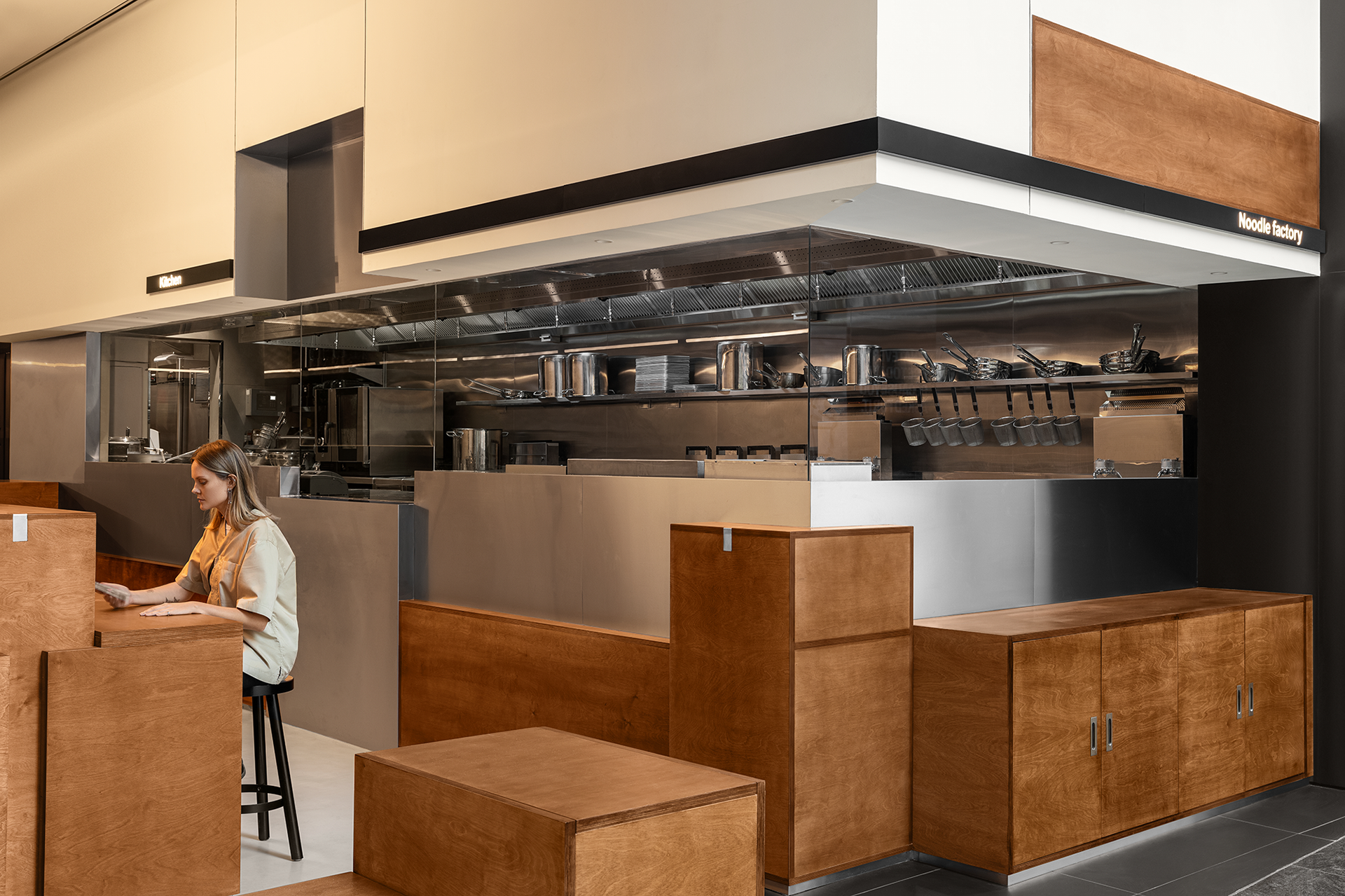
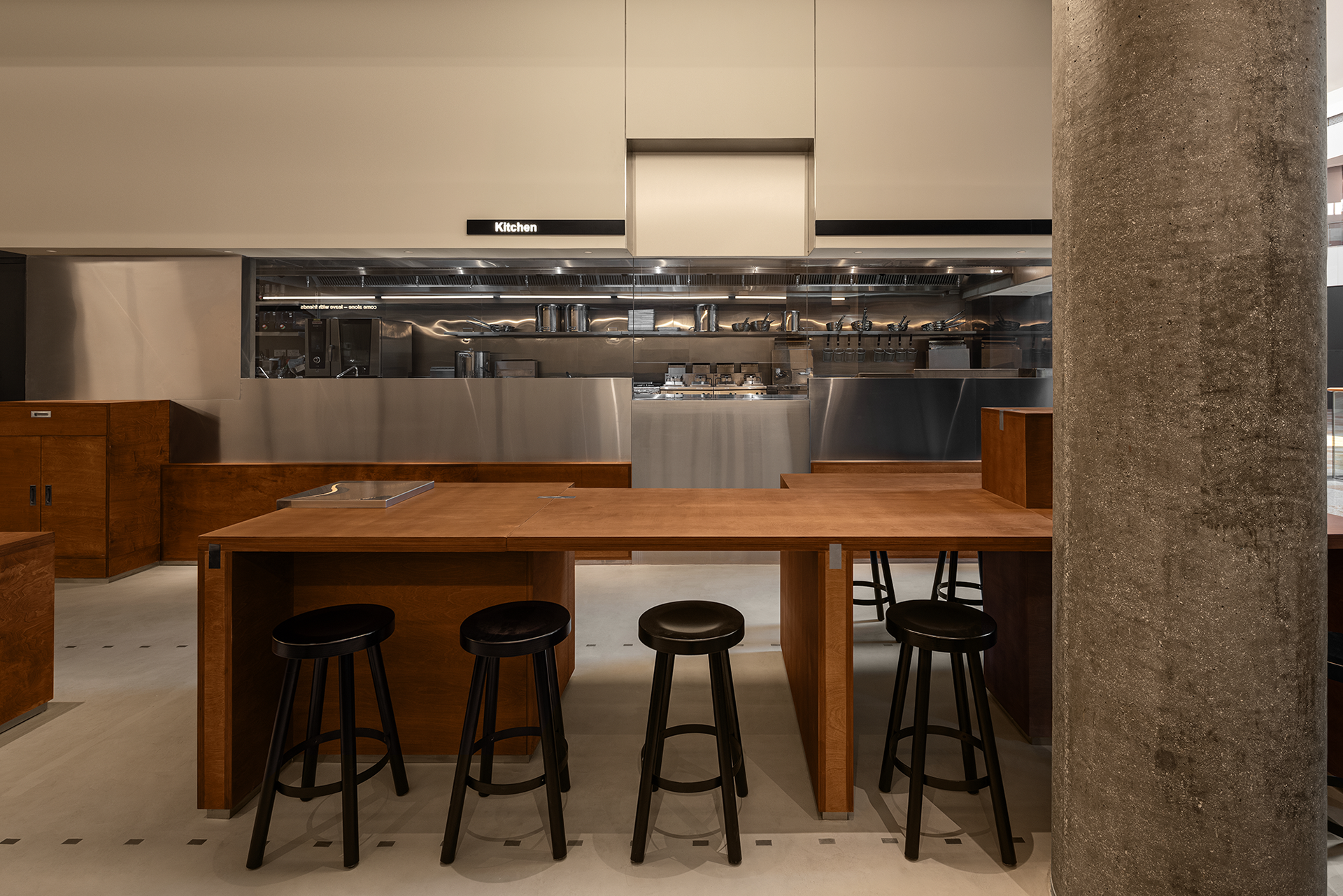
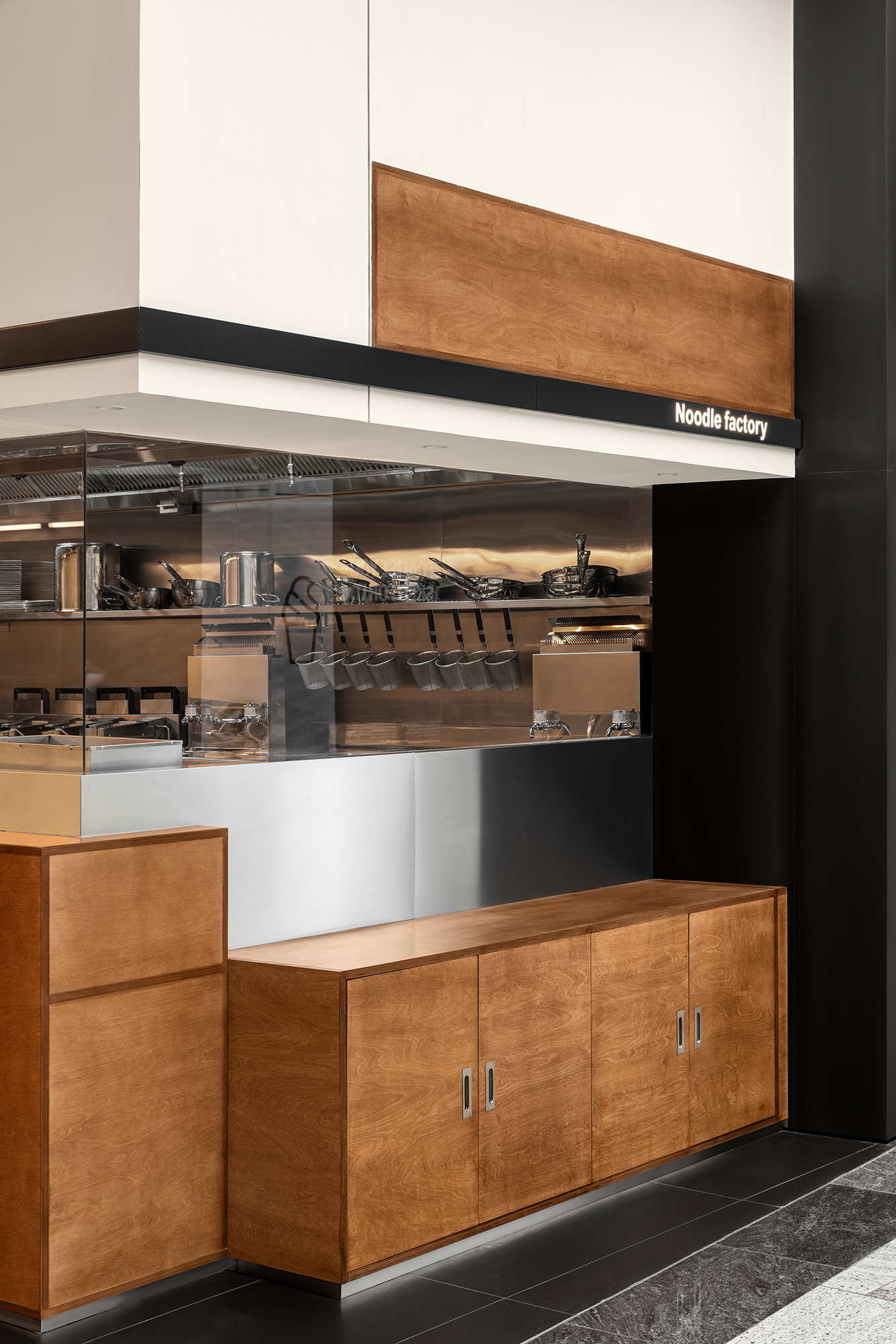
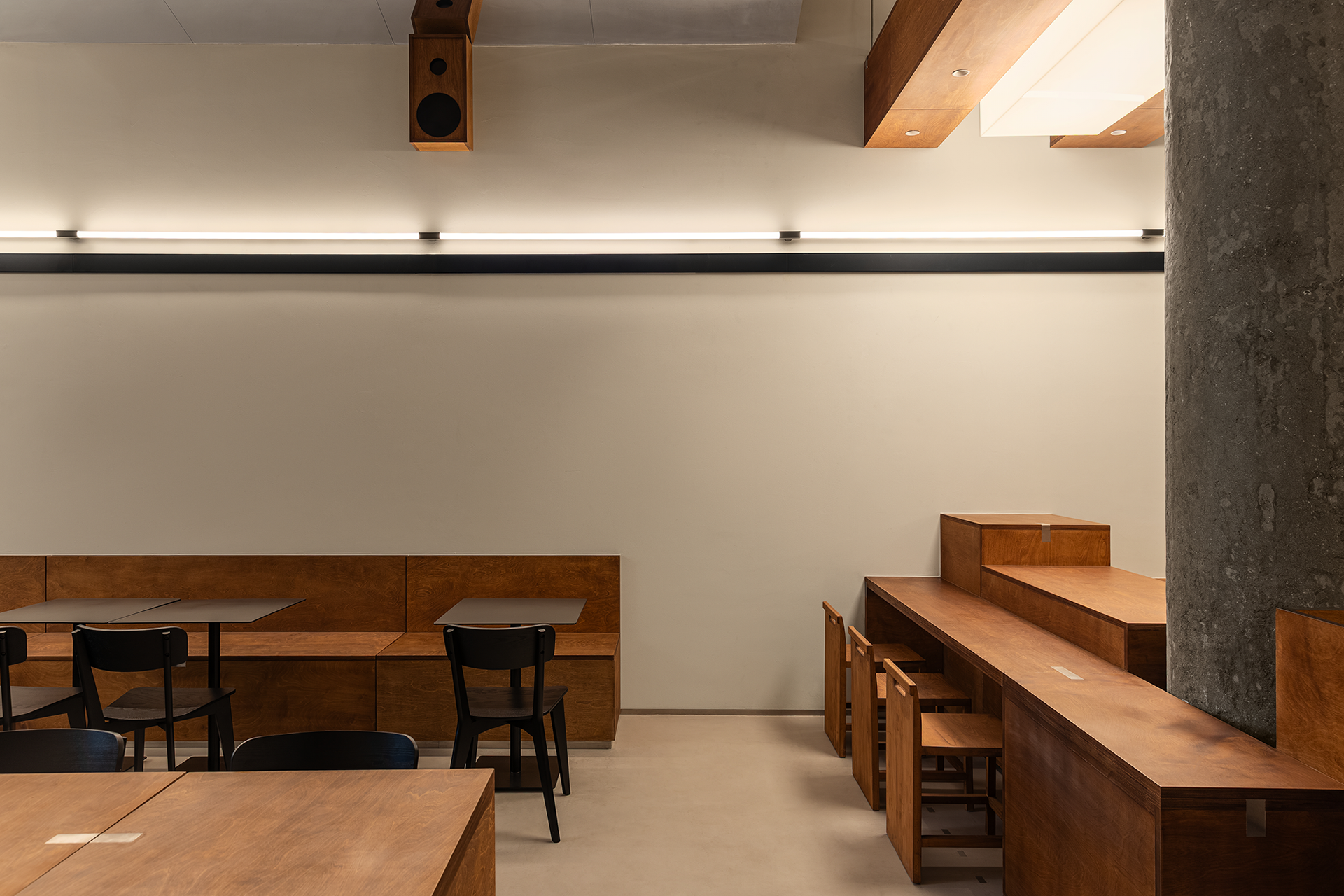
The geometry of the space was made orthogonal, built on the pairing of plywood and stainless steel. The rawness of the materials and strict forms reinforce the bold character of the brand, while the site’s features —
a concrete column, a structural beam — are not concealed but integrated into the visual structure.
a concrete column, a structural beam — are not concealed but integrated into the visual structure.
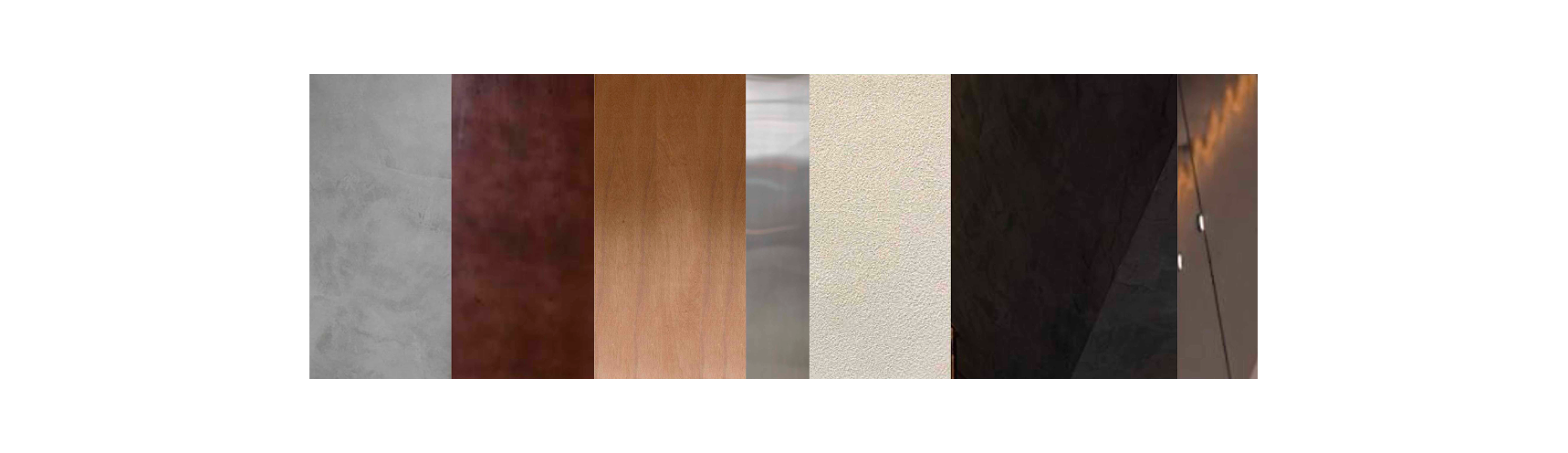
material board
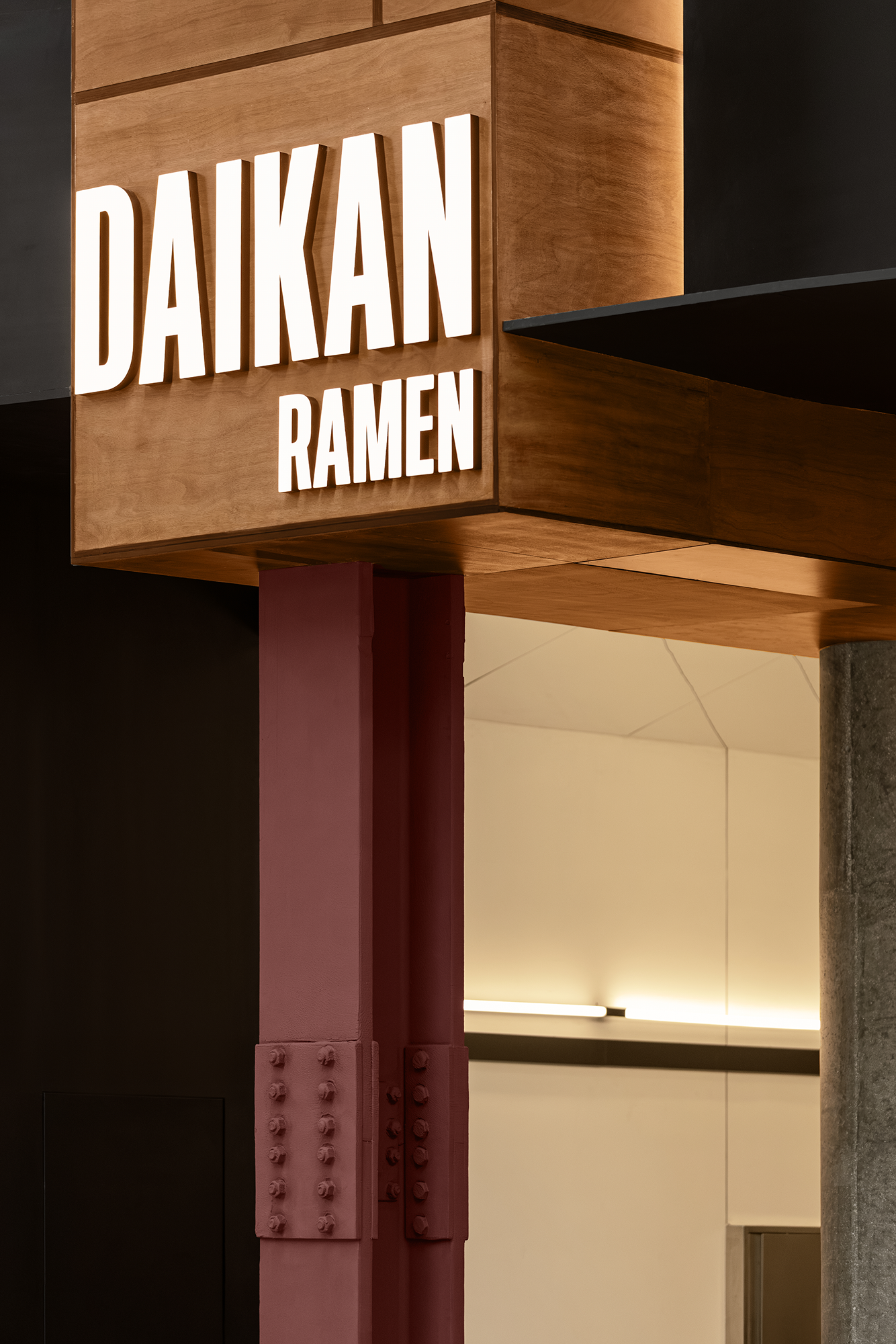
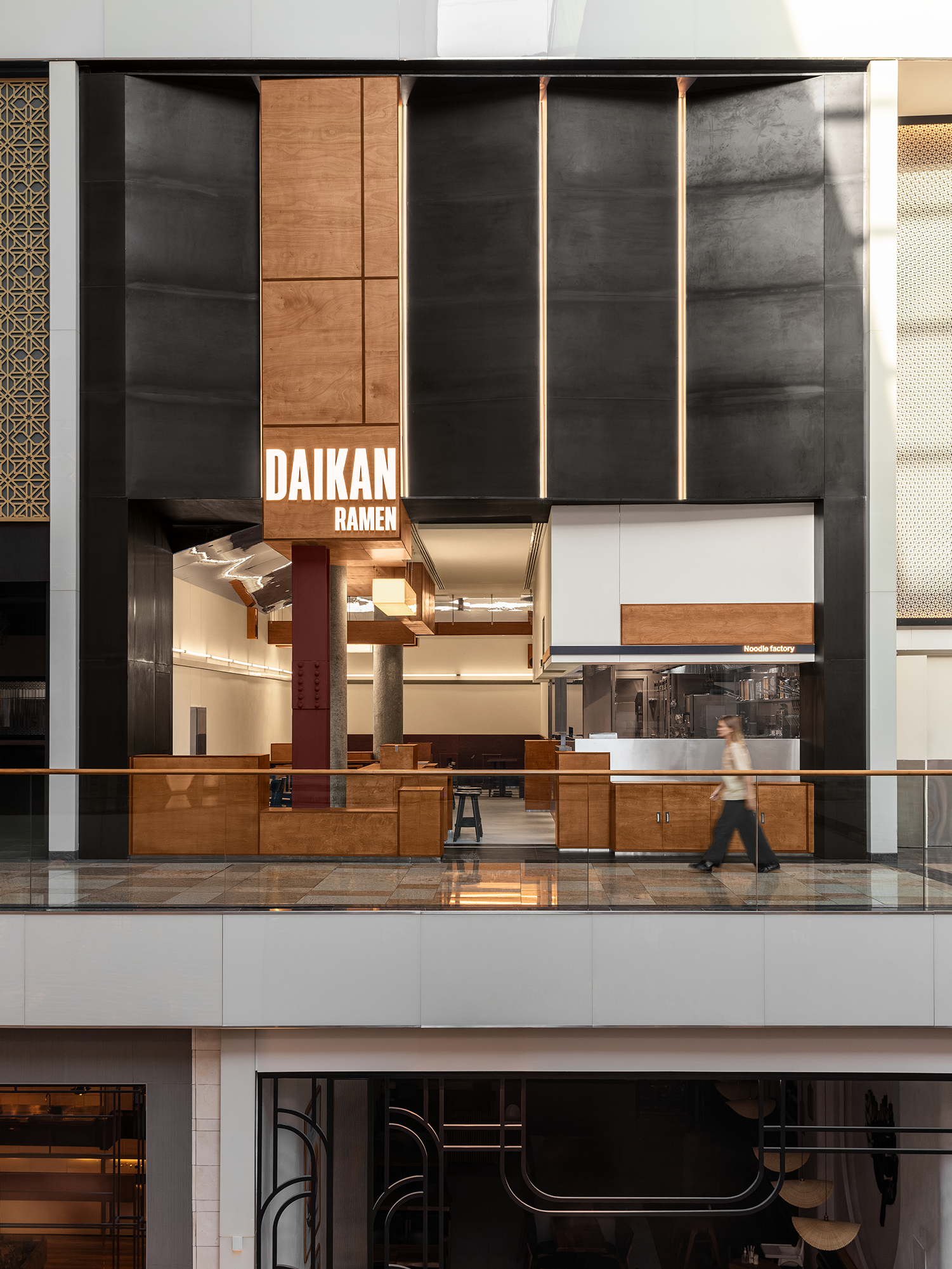
At the entrance, a key wooden connector element hovers above the pickup station, setting the rhythm of the interior and continuing into the ceiling composition, visually linking the facade with the interior.
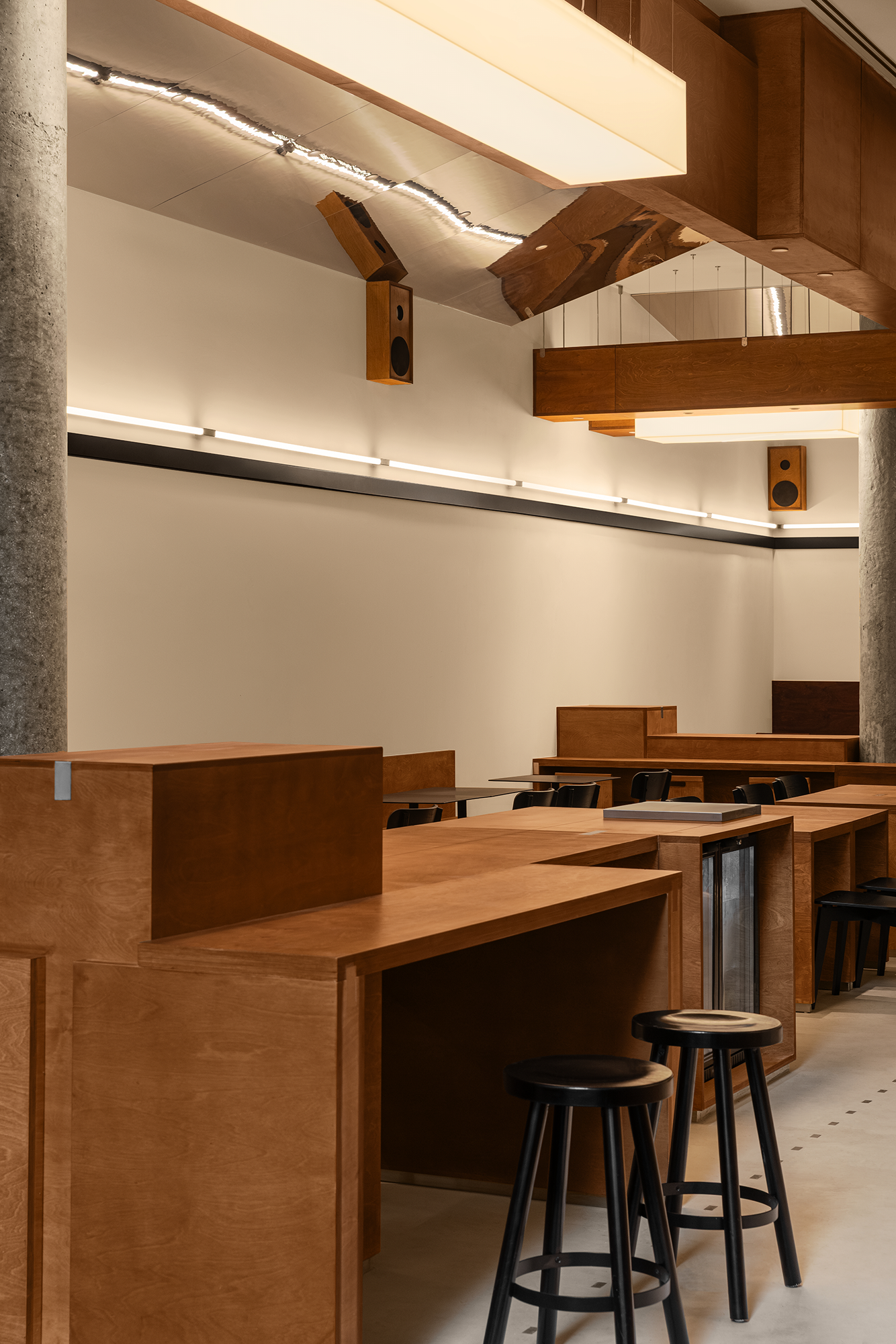
An additional conceptual layer is the feeling of street food. It emerges through dimmed lighting, branded wayfinding signage, and mirrored ceiling panels that intentionally distort light reflections — like puddles trembling with reflections of street lamps.
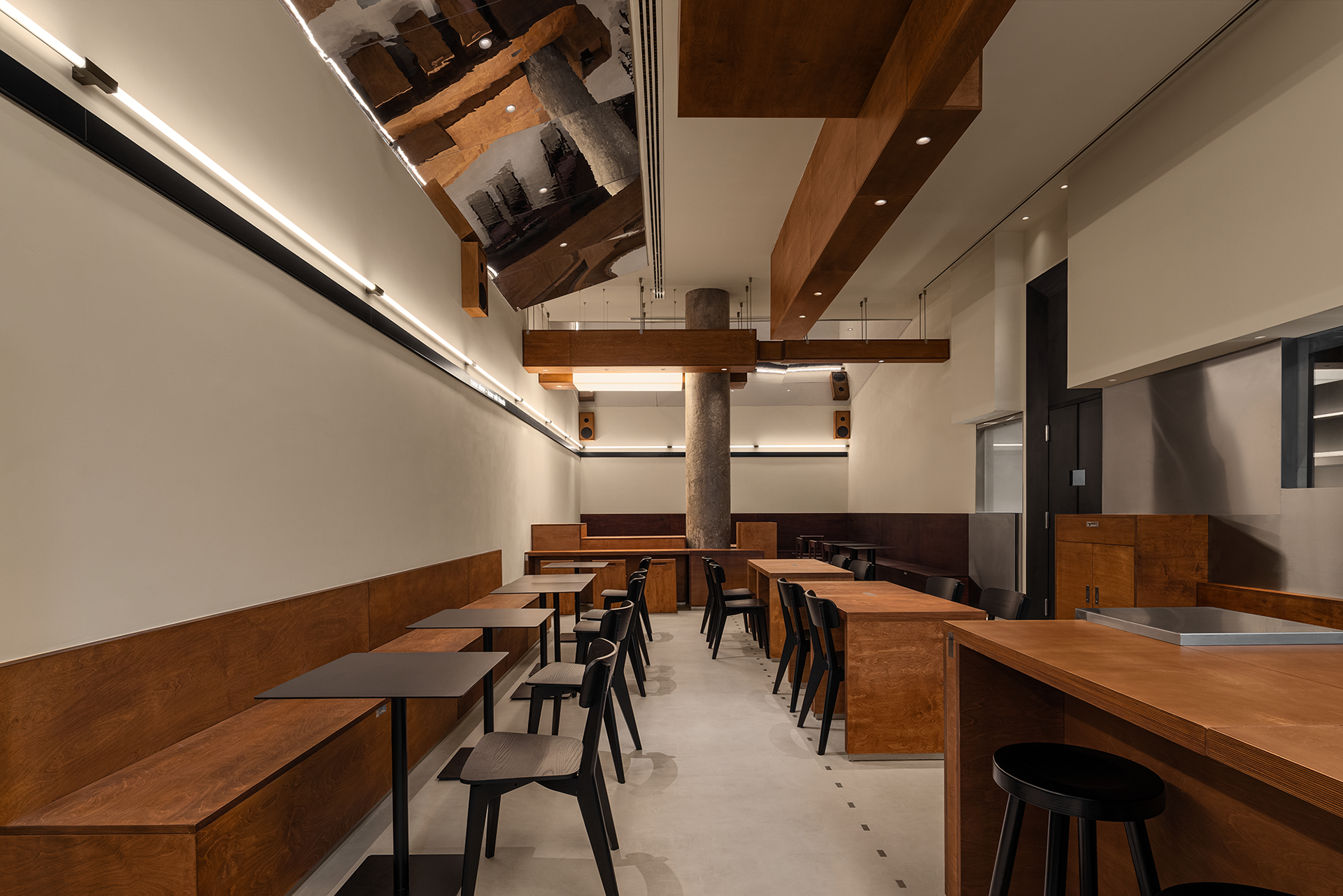
The street theme is echoed in metal inlays on the floor that create trajectories resembling road markings, while similar details on the furniture “connect” its parts, linking the two conceptual lines — Japanese joinery and the urban landscape.
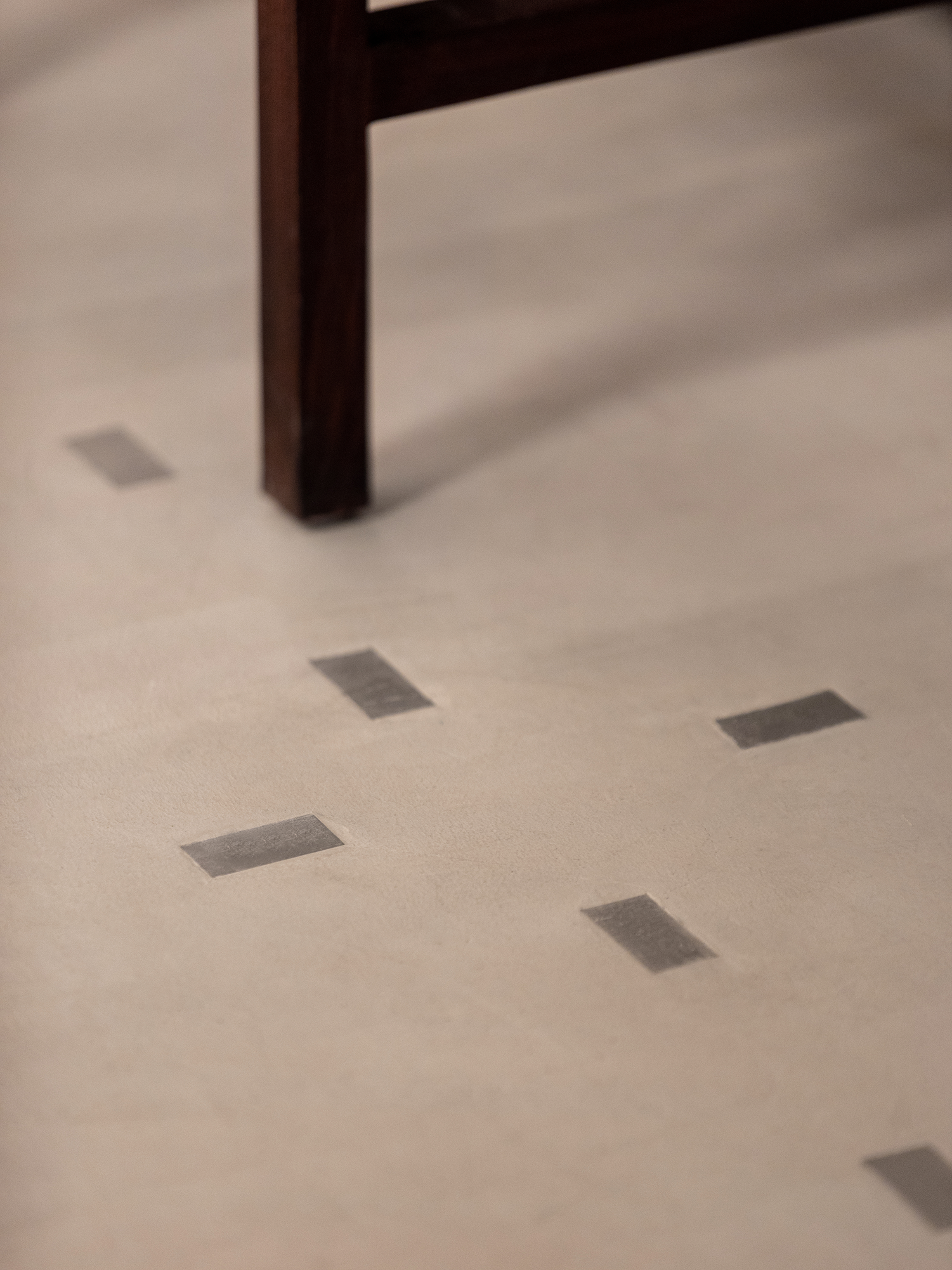
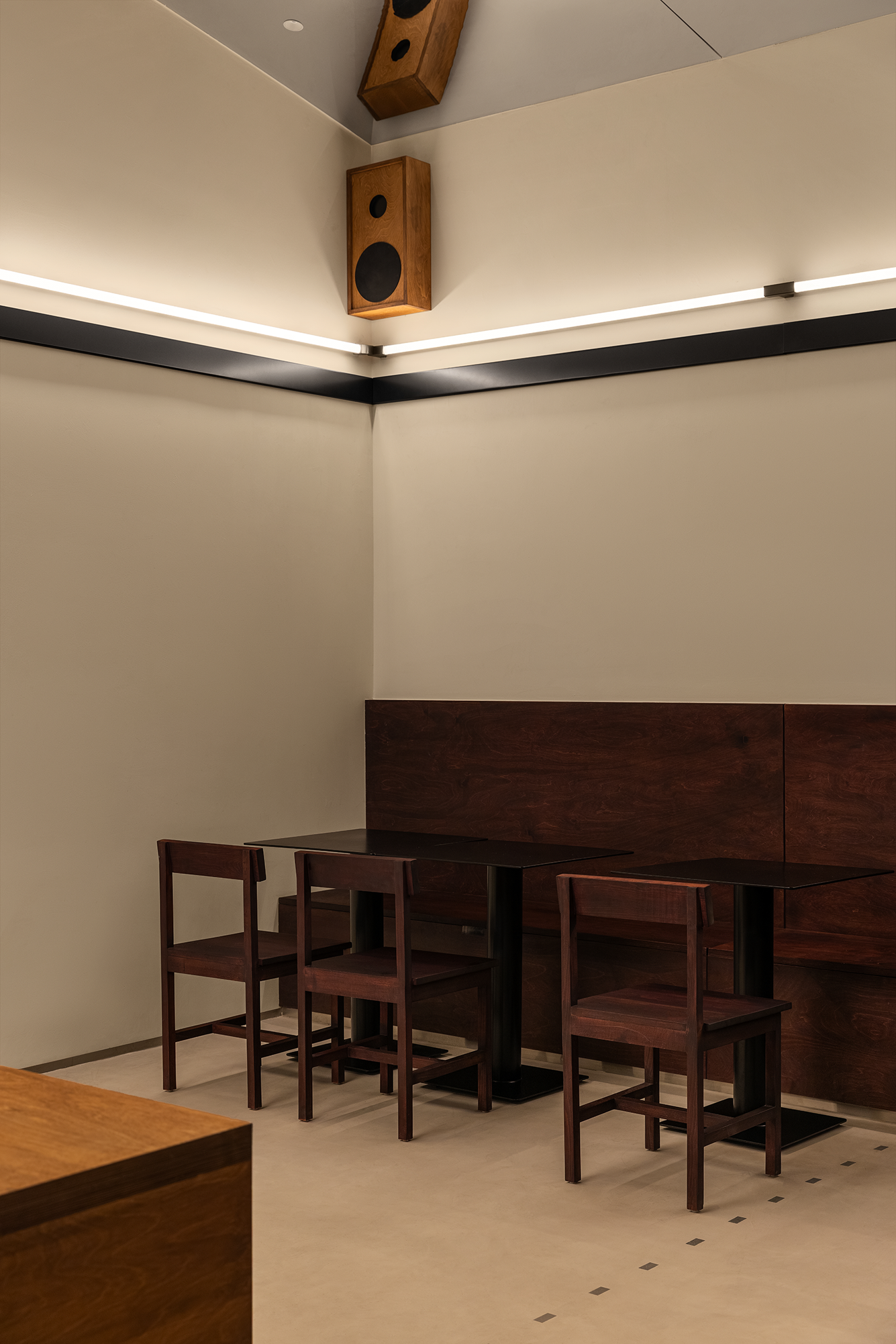
The project deliberately avoids excessive technological sleekness: preserving tactility was key — concrete, expressive-grain plywood, stainless steel, and blackened steel.
Meanwhile, the facade became the engineering core of the project: a nine-meter metal structure combining large black steel blades and a complex wooden element developed together with structural engineers and assembled with high precision.
process ↓

↓ project team